Preserving Lineage. Cultivating Wisdom.
A defined community aligned with lineage, scholarship, and disciplined stewardship
The International Foundation for Tantra and Vedic Heritage (IFTVH) serves a defined community committed to preserving authentic Indic spiritual and knowledge traditions. It is not designed for mass appeal or commercial expansion, but for those who value depth over scale, continuity over novelty, and discipline over display.
Disciplined sādhakas, rooted in paramparā and kula. The Foundation exists to preserve transmission — not promote personalities.
Researchers engaging manuscripts, ritual systems, oral traditions and lived spiritual cultures.
Academic, cultural, and public bodies engaging without ideological, political, or sectarian alignment.
Without ideological or sectarian alignment.
Individuals and families supporting authentic wisdom with discretion, humility, and respect for institutional autonomy.
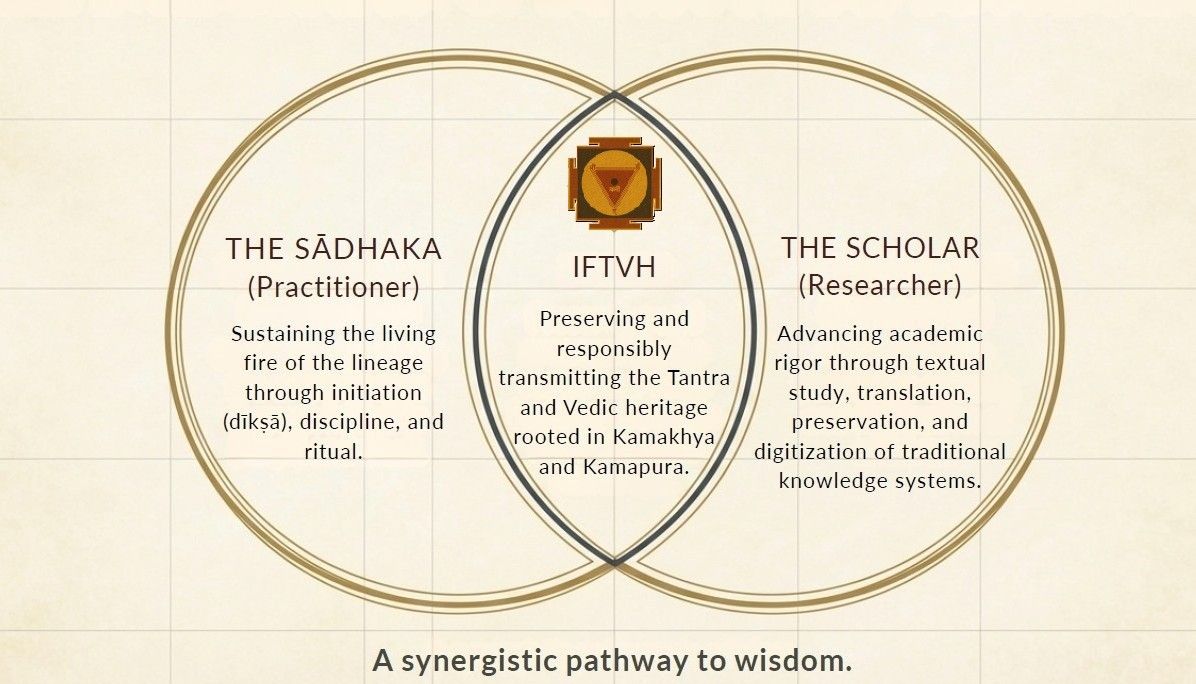
The intersection of Sādhanā and Scholarship — a synergistic pathway to wisdom
Facilitating initiation (dīkṣā), training, and ritual practice in strict accordance with the Kulācāra Tantra paramparā. All practices preserved in fidelity to their source traditions.
Upholding the traditional Gurukula model to preserve depth, rigor, and lineage authenticity.
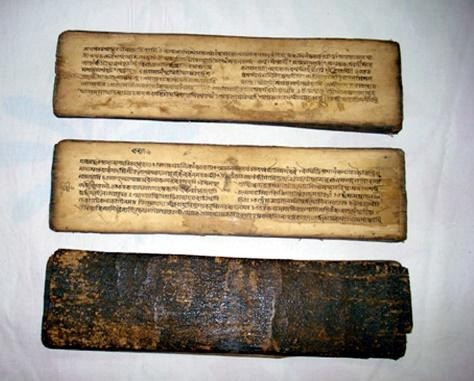
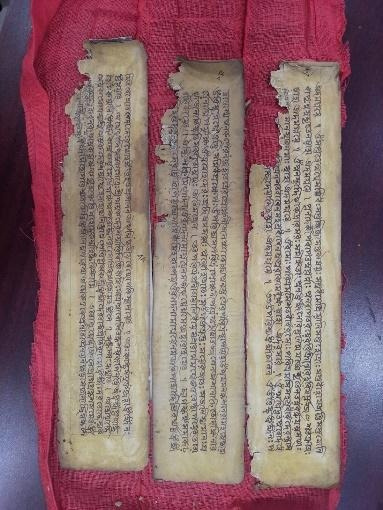
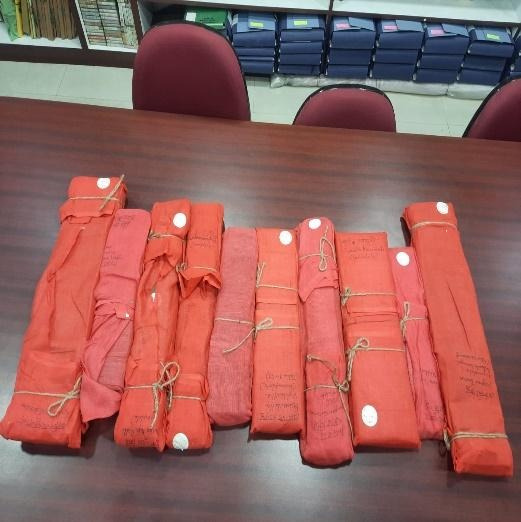
Conservation, digitization, translation, and responsible publication of rare manuscripts across Hindu, Buddhist, and Jain Tantric traditions. Safeguarding endangered knowledge systems and fragile textual heritage.
Supporting affiliated study and practice centres worldwide to cultivate authentic, lineage-aligned nodes of learning and disciplined engagement.
The Foundation's office, reference library, digitization station, and manuscript archive
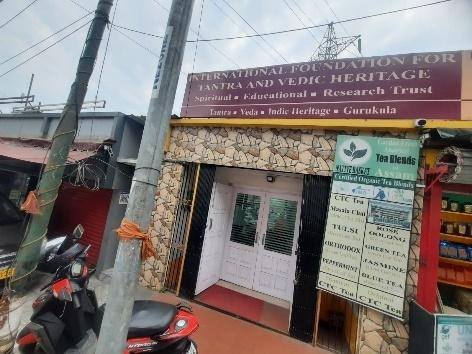
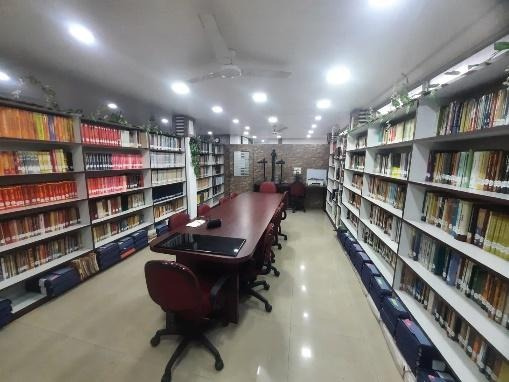
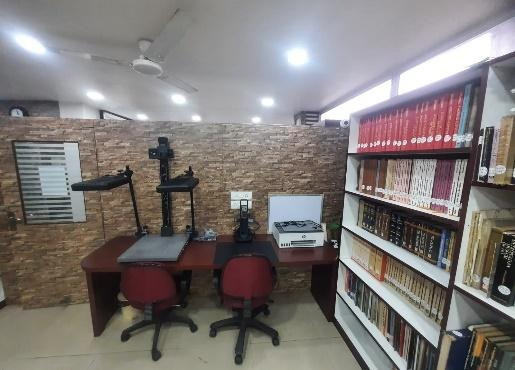
The Trust operates through a structured institutional framework
In pursuit of its multidisciplinary mission, the Foundation intends to:
2012 – 2026
Rajib Sarma and Bandana Sarma initiate the systematic exploration, collection, and preservation of endangered manuscripts and textual materials.
Collection of 500+ manuscripts and 5,000+ rare books. Expansion of manuscript holdings and rare book archives. Digitization and preservation initiatives commence. Early publications on Tantra and Dashamahavidya traditions released.
Strengthening of institutional structure with the inclusion of Muthyala Rajesh Babu and Muthyala Kalpana Raj, supporting strategic development and governance formation.
Formal registration of the Trust under the Indian Trusts Act, 1882. Formalizing a decade of ongoing preservation and lineage-support initiatives.
The Founder Trustees guiding the Foundation's mission
Founder Trustee, Ācārya & Kuladhāraka
A hereditary Chandipāthaka priest of the Kamakhya Temple and a Pūrṇābhiseka sādhaka of the Kulācāra Tantra Mārga. Recipient of the Krishi Visharad Samman from the Government of India, and founder of the Foundation for History and Heritage Studies.
Founder Trustee, Head – Finance & Compliance
Descendant of a hereditary Chandipathak Priest Family and Purnabhisheka Sadhaka, custodian of an extensive reference library and archive, and an experienced collaborator on national and international environmental and agrobiodiversity projects.
Founder Trustee, Chairman of the Executive Council
A Shaktābhişeka sädhaka with over 35 years of entrepreneurial and leadership experience across technology, agriculture, mining, and infrastructure sectors, known for scaling systems from concept to execution.
Founder Trustee, Head – Education & Sādhanā Programs
A Shaktābhişeka sādhaka and senior corporate leader with expertise in human resources, governance, and organizational systems, focused on people-centric leadership and operational discipline.
Strategic and institutional guidance in support of mission integrity, compliance, and long-term sustainability
Served in the Indian Administrative Service (Assam cadre,1978 batch) and retired as Chairman of the Nodal Agency for the Integrated Watershed Management Programme. Government of Assam.
Former Director & Board Member of Oriental Bank of Commerce (now Punjab National Bank)
Founder of Indorient Financial Services and Vardan Signature Capital
Fellow chartered accountant with more than five decades of distinguished practice in direct taxation and advisory. Former Chairman of the Hyderabad Chapter of ICAI and former President of the Andhra Pradesh Tax Bar Association.
Senior Emergency Physician at Whipps Cross University Hospital, London, with two decades in emergency medicine. A Purnabhisheka Sādhaka in the Kamakhya tradition, integrating medical service with spiritual commitment. Awarded “Pulse Above and Beyond” (2025).
Leading International scholar of Kashmir Śaivism and Tantric philosophy.
Former Director of Rivista degli Studi Orientali
Renowned scholar of Tantric traditions, secrecy, and esoteric religions. Author of influential books including Tantra: Sex, Secrecy, and Power in the study of religion.
Research scholar of Śākta traditions and Kaula Tantra, combining textual study with ethnographic fieldwork in India. Her work explores ritual practice, gender, and lived Tantric traditions.
A distinguished printmaker and former Associate Professor at Kala Bhavana, Santiniketan, and Head of Graphics at Government College, Guwahati. Founder of Heritage Print Studio,
A clear and mandatory separation between spiritual authority and administrative governance ensures institutional balance, continuity, and accountability.
All funds are utilized exclusively in furtherance of the foundation’s charitable, educational, and* heritage preservation objects. The trust maintains rigorous financial discipline and full audit transparency.
All contributions are voluntary and non-commercial in nature. Financial support confers no governance control or decision-making rights within the trust.
Legal Constitution |
|
| Name of the Trust | International Foundation for Tantra and Vedic Heritage (IFTVH) |
| Legal Status | Public Charitable, Religious, and Educational Trust |
| Date of Registration | 16 January 2026 |
| Place of Registration | Guwahati, Kamrup (Metro), Assam | Statutory Identifiers |
| Trust Registration No. | 2026/IGR15/4/112 |
| PAN | AACIT5710P | Registered Addresses |
| DARPAN Registration ID | AS/2026/0979943 |
| Registered Office | Maligaon Chariali, Near Overbridge, P.O. Pandu, Guwahati – 781012, Assam, India |
Branch Addresses |
|
| Branch Location Office: | C/o Foundation for History and Heritage Studies, Kamakhya Temples’ Complex, P.O. Kamakhya, Kamrup (Metro), Guwahati– 781010, Assam (India) |
Development and maintenance of sadhana halls, study environments, and institutional facilities necessary for lineage-aligned practice and learning.
Conservation, digitization, translation, and safeguarding of endangered manuscripts, rare texts, and traditional knowledge systems.
Support for scholars, researchers, sādhakas, and educational initiatives dedicated to preserving authentic traditions.
Annadana (food distribution) and related service programs aligned with the Foundation's spiritual and cultural mission.
Support for the Foundation is not merely a contribution but participation in the preservation of a living knowledge tradition at risk of erosion and misinterpretation. We invite responsible and disciplined stewardship to help ensure that this sacred heritage remains accessible to future generations.