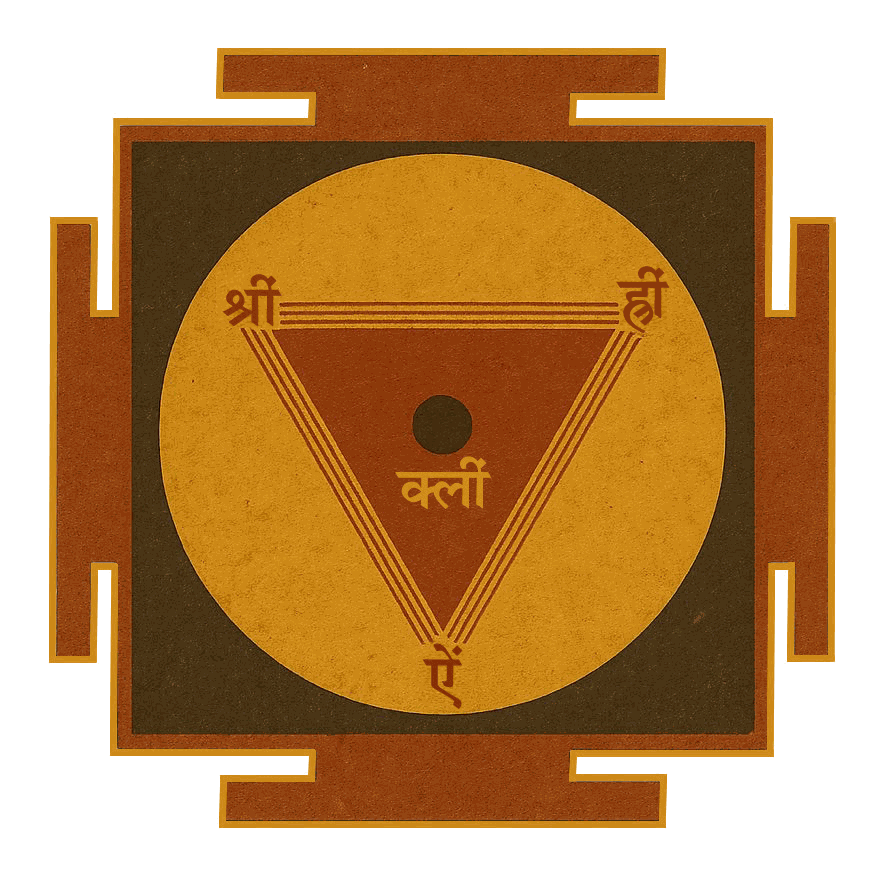
The unique fusion of Nagara and indigenous temple architecture
The Architecture of Kamakhya Temple and the network of temples of the Kamakhya Temples' Complex is a fusion of Nagara and indigenous style of Temple Architecture. The Kamakhya Temple is a cruciate ratha type of Bada upon which a polygonal bulbous dome is placed. The outer walls of the elevation are delicately ornamented by stunningly beautiful sculptures. This development of the hybrid style of Architecture continued from the Koch Kings to the Ahom kings of Assam.
The structural composition of the Kamakhya Temple comprises: Garbha Griha, Chalanta, Pancha Ratna, and Nat Mandir. There are 3 access gates to the Kamakhya Temple:
Apart from these, there are two access gates to the campus: in the east, the Bhag Dvara (Tiger Gate) and in the west, the Simha Dvara (Lion Gate). Both gates are decorated with beautifully carved sculptures.
The Garbha Griha houses the Peetha of Devi Kamakhya (Devi Tripura Sundari), Devi Matangi (Devi Saraswati) and Kamala (Devi Lakshmi) — the main deity. The Garbha Griha is a small cave-like dark space below the ground level with a narrow stone stair from the Chalanta area.
The Chalanta hall houses the movable idol of Devi Kameshwari & Kameshwara in a Simhasana, Batuk Bhairava, stone inscriptions of King Naranayana and Chilarai, and other curious sculptures. The hall is built on 12 pillars at the centre arranged in a rectangular manner. The east gate connects to the Garbha Griha, the west gate connects to Pancha Ratna, and the north gate makes a way to the sacred Saubhagya Kunda. The roof has dome-like structures identical to the Shikhara of the Garbha Griha.
Pancha Ratna hall is a square chamber similar to Chalanta. It houses the idol of Devi Chamunda, an altar of Devi Manasa, and the walls are adorned with curious sculptures. The ceiling is supported by four structures resembling wall-like formations. On the roof, there are five Shikharas — four in the corners and one in the middle. The east gate connects with Chalanta and the west gate connects to Nat Mandir. Pancha Ratna is used for performing ritualistic events.
Nat Mandir has an apsidal frontage and a ridged roof similar to the Ranghar complex of the Ahom Kingdom located in Sivasagar. Technically, the roof is known as Gajapristha (Elephant back). On the western tip of the roof there is a Dragon-like sculpture which can be found in some other structures built by the Ahom kings. Nat Mandir has six gates with significant width and the Dragon-like terracotta sculpture can also be seen on upper side of the walls of each gate.
On both sides of the eastern gate, life-sized idols of Devi Durga and Lord Shiva can be seen, and the other walls are decorated with interesting sculptures. Two huge stone platforms on the floor of the eastern gate indicate that the space was used for performing ritualistic music, devotional songs and dance performances. The space of the Nat Mandir is still used for the annual Debaddhani Ritualistic Dance Festival.